

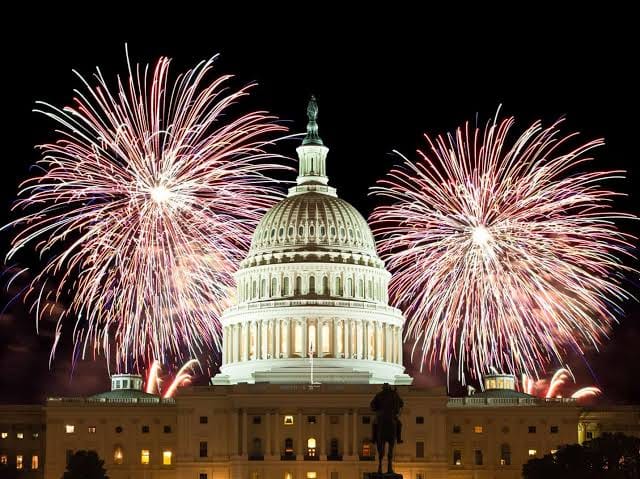
On Independence Day, Americans celebrate their Founders, memorable because they were centuries ahead of their time.
When George Washington was elected president, for example, there was still a king in France, a tsar in Russia, a shogun in Japan and an emperor in China. The prevailing wisdom held that governments were divinely instituted, with rulers appointed by God to preside over their subjects.
The United States, on the contrary, predicated its Constitution upon the authority of "We the People," never mentioning a deity. Legitimate power derived not from holy writ but from the consent of the governed. So John Adams cautioned that the framers never “had interviews with the gods or were in any degree under the inspiration of heaven” and that ours was the “first example of government erected on the simple principles of nature.”
The concept of popular sovereignty caught on. Despite our wannabe Monarch in the White House, kings are a vanishing breed, while even the most brutal despots must hold sham elections and at least pay lip service to the people's will.
Our Founders, moreover, invented the notion of human rights. In an age of slavery, it was an ideal honored more in the breach than in the observance. But even the worst offenders, like Jefferson, unleashed the radical precept that "all people are created equal," and once that spark was ignited, the fire would spread. The idea that individuals possessed inherent rights to life and liberty led to the demand for civil rights and women's rights, the rights of labor and of children, gay rights and the rights of indigenous people, even animal rights. Our world has been transformed for the better, thanks to the flame they kindled.
Most importantly, our Founders embraced the principle of religious pluralism. Violent wars had engulfed Europe in the seventeenth century because of the presumption that all citizens must share a single creed. Millions died in conflicts that pitted Protestant against Catholic and everyone against the Jews.
Determined that faith could be a positive, cohesive force in human affairs, the Founders guaranteed that America would be a land where spiritual variety might flourish. No religious litmus test would be imposed as a bar to public office. Under the guarantees of the First Amendment, people could worship according to the directives of their conscience. The government would stay doctrinally neutral.
In answer to the recurring question, was America intended to be a Christian nation or a secular one, the Founders rejected the premise. They intended the United States to be a land where faith could thrive in the private sphere, and while believers of all stripes might compete for converts, they should never compete for political domination or tax dollars or military might. That's what led to the religious convulsions of the seventeenth century and what the Founders, by separating church and state, tried to avoid.
Today, thanks to their foresight, the United States is not only one of the most devout countries on earth. It is also the most spiritually diverse, where mosques, churches, synagogues and zendos are filled with ardent adherents. Despite the occasional misguided soul who urges us to burn Qur’ans or preaches hate, Christians, Buddhists, Muslims, Hindus, Jews and atheists manage to live in tolerable harmony on this continent, worshipping in their distinctive ways yet determined to extend the same freedom to others. The Founders would be pleased. This is exactly what they intended.
Government by the people. Human rights. Religious freedom. Big ideas worth fighting for and defending today, just as they were 250 years ago. It's a legacy that people of all persuasions can commemorate on America’s birthday. Happy Fourth of July.