
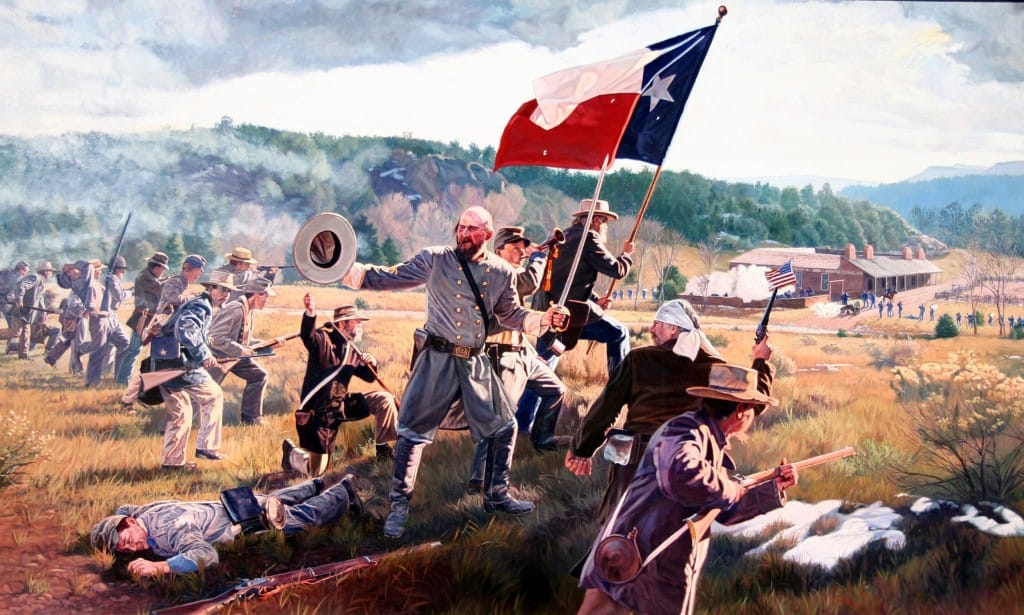
In October of 2020 protesters toppled and smashed the Soldiers’ Monument in Santa Fe, a thirty-three foot stone obelisk in the downtown Plaza originally erected in 1868 to commemorate Union soldiers who defeated a Confederate foray in the battle of Glorieta Pass. The skirmish is sometimes called the “Gettysburg of the West.” It was an important victory that kept Jeff Davis from acquiring Colorado’s gold and silver mines and that drove the rebels back to Texas.
Three panels at the base of the cenotaph paid tribute to the “heroes of the federal army who fell at the battle.” But the fourth honored “heroes who have fallen in the various battles with savage Indians in New Mexico.”
In 1973, the state Cultural Properties Review Committee added a brass plaque explaining that
"Monument texts reflect the character of the times in which they are written and the temper of those who wrote them. This monument was dedicated in 1868 near the close of a period of intense strife which pitted northerner against southerner, Indian against white, Indian against Indian. Thus, we see on this monument, as in other records, the use of such terms as 'savage' and 'rebel'. Attitudes change and prejudices hopefully dissolve."
But the following year, an anonymous critic chiseled out the offensive reference to “savage” Indians. On Indigenous People’s Day six years ago, the entire plinth was pulled to the ground and shattered.
The question of how to respond—or rebuild—has divided our city ever since. The Union Protectiva de Santa Fe, an established voice for New Mexicans of Hispanic descent, filed a successful lawsuit against then Mayor Alan Webber's plan to dispose of the monument. Spokespeople for the native Pueblos weighed in to move the obelisk to the National Cemetery. A costly commissioned CHART (Culture, History, Art, Reconciliation and Truth) report in 2022 suggested that the issue needed (guess what?) more study. Now our local City Council has put the fragments of the demolished obelisk on display in the state history museum for what could be another four years of public indecision, kicking the can further down the road until 2030. The folks we elected to make tough decisions are running for cover.
The Santa Fe New Mexican has received hundreds of letters with ideas on what to do. Rebuild the monument without the offending language? Put a fountain in its place? No solution is likely to please all parties.
But here is one idea I haven’t heard before. Rebuild the obelisk, but only halfway. Leave the capstone off. Let the monument be unfinished, the way America itself is unfinished. The way the sacrifice of the soldiers at Glorieta Pass will remain unfinished until we have a final reckoning with the legacy of slavery and racism in our land. The way our relationship with the Tewa-speaking inhabitants of this place they called Oga Po'geh, the “White Shell Water Place,” will remain incomplete until we acknowledge and repair the costs of broken treaties and unkept promises. The way America will be a work-in-progress until we finally deliver on our commitment to equality under the law, with liberty and justice for all, not just for the wealthy and well-connected but for everyone.
An unfinished obelisk, pointing skyward but with work still remaining. What better way to honor the past? What better way to invoke a future that after 250 years is still very much in the making?