

Yes, it was great fun watching Elon Musk squander half a billion dollars 💸 trying to buy himself a Texan senator. It was fun to hear that he lost another $113 billion 💸💸 after the election as his stocks plummeted in value. But the very fact that he is in a position to lose so much money (and oh please Lord may he lose hundreds of billions more, and his freedom to boot!) is a reminder of how unequal our country is.
As to whether it is appropriate to call the United States wealthy, consider the national slogan of Brazil: “País Rico é País Sem Pobreza” or “A Rich Country is a Country Without Poverty.”
In previous blogs I wrote about welfare queens – how it’s the rich, not the poor, who receive the lion’s share of government largesse. I also wrote about robbing the poor.
 Debra Efroymson
 Debra Efroymson
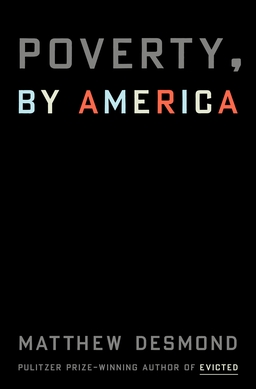
Today let’s talk about inequality, again based on Matthew Desmond’s book Poverty, by America.
Desmond shares a few figures about American opulence. In 2020, Americans bought more than 310,000 new powerboats and spent over $100 billion on pets. In 2019, we spent $723 billion on leisure travel. We drive bigger cars than people in other countries; three new English homes would fit into the average new American house. And yet, all this unprecedented wealth has not bought us leisure or relaxation. As Desmond asks, “Has there ever been another time, in the full sweep of human history, when so many people had so much and yet felt so deprived and anxious?”
People with tremendous, or even just ample, wealth still want to get their goods and services cheaply, and they don’t want to pay taxes. When we demand low-cost items, it is workers who suffer. When we underpay our workers, they rely on government assistance. The rich opt out. Government services thus become the province of the poor and tend, thanks both to our lack of interest and our distaste for paying taxes, to be of terrible quality. Thus “private opulence and public squalor.” Public schools, public transit, public housing, and so on become ever worse; the rich retreat into their privatized, sanitized, separate world of wealth. (Living car-free by choice, I sometimes ride the bus in Santa Fe and Albuquerque and could tell many stories about the degree to which those services are allowed to decay when most of the riders are poor.)
One place where the rich and poor unite is in their condemnation of public services. The rich don’t want to pay taxes; the poor suffer the results in poor infrastructure. The Flint water crisis, for example, was caused by legislators in Michigan listening to their wealthy constituents and not raising taxes, then canceling infrastructure upgrades and firing the safety inspectors who would’ve identified the problem. And thus at least 12,000 children suffered lead poisoning.
Desmond writes that “Over the past fifty years, personal incomes in the United States have increased by 317 percent, and yet federal revenue has increased by only 252 percent.” We spend more on ourselves and less on our communities. And then we suffer the results.
We like to blame Trump for so much that is wrong, and indeed he is responsible for unprecedented havoc and destruction. But let’s not forget the Economic Recovery Tax Act of 1981, which slashed taxes, including for the rich, and then gutted the public sector. The Department of Housing and Urban Development once had a budget second only to the Department of Defense; Reagan cut its budget by nearly 70%. We wonder why public housing is atrocious, but don’t want to pay for it.
And it’s not only Republicans. Time and again, Democrats have voted for tax cuts. Remember California’s Proposition 13? Both sides of the aisle supported it. It “capped property taxes at 1 percent of a property’s assessed value and froze that value at the property’s original purchase price” and somehow won 65% of the vote. Individuals got richer; public services suffered. For the first time since the Great Depression, California canceled summer school, and went from being first in the nation in education funding to ninth from the bottom. The giddy high of tax cuts spread from California to the nation with devastating results.
It doesn’t need to be this bad. There are 66 countries in the world with less income inequality than the US (https://www.worldeconomics.com/Rankings/Economies-By-Inequality.aspx). It is important to remember that these problems preceded the current administration, and will dog us long after if we don’t actively address them. And as I will write in my final blog based on Desmond’s book, “It means that those who have benefitted from the nation’s excesses will have to take less so that others may share in the bounty.”
No, nobody should be a trillionaire or even a billionaire. We can agree that it would be delightful to see Musk lose his wealth as our new government cancels his contracts and investigates his corruption. But a lot more will have to happen, and some of it will be personal. Are we ready?
 Contributors to Wikimedia projects