
Will the real welfare queens please rise? One thing you might notice about the people rolling in government largesse. They are not poor. They are not Black. They are not (other than some notable exceptions like Elon Musk) immigrants.
The situation has been bad for a while. Thanks to the current government (that is, all the Republicans who voted for it), with the so-called One Big Beautiful Bill Act, $1 trillion will be cut from health programs, resulting in an estimated ten million people losing their health insurance. At least $120 billion is being cut from SNAP (the Supplemental Nutrition Assistance Program) because why should Americans be able to eat? Medicare will lose approximately $500 billion between 2026 and 2034. Meanwhile, the national debt will increase by at least $3.4 trillion. All to benefit those ultra rich welfare queens.
 mshepard
Because the OBBA reflects the usual situation: policymakers and pundits act like we cannot afford “benefits” for the poorest, all while happily providing the wealthy with enormous tax cuts and subsidies. The OBBA:
- Actually raises taxes on the poorest 40% of Americans and barely cuts taxes for the middle 20%;
- The richest 1% will receive a bigger tax cut in 2026 than the bottom 80% of Americans, receiving a $1 trillion tax cut over the next ten years.
- More than 70% of the tax cuts go to the wealthiest 20% of Americans, while cutting federal revenue by nearly $570 billion in 2026 alone.
- If you add in the tariffs and expiration of enhanced Affordable Care Act tax credits, all except the richest 5% of Americans will on average pay higher taxes in 2026.
 News Release
The disgusting fallacy about welfare queens dates back at least to Ronald Reagan’s derogatory and unfounded comments obviously meant to refer to Black women on welfare. He famously said that as a slum dweller, “you can get an apartment with 11‐foot ceilings, with a 20‐foot balcony, a swimming pool and gymnasium, laundry room and play room…” Uh huh.
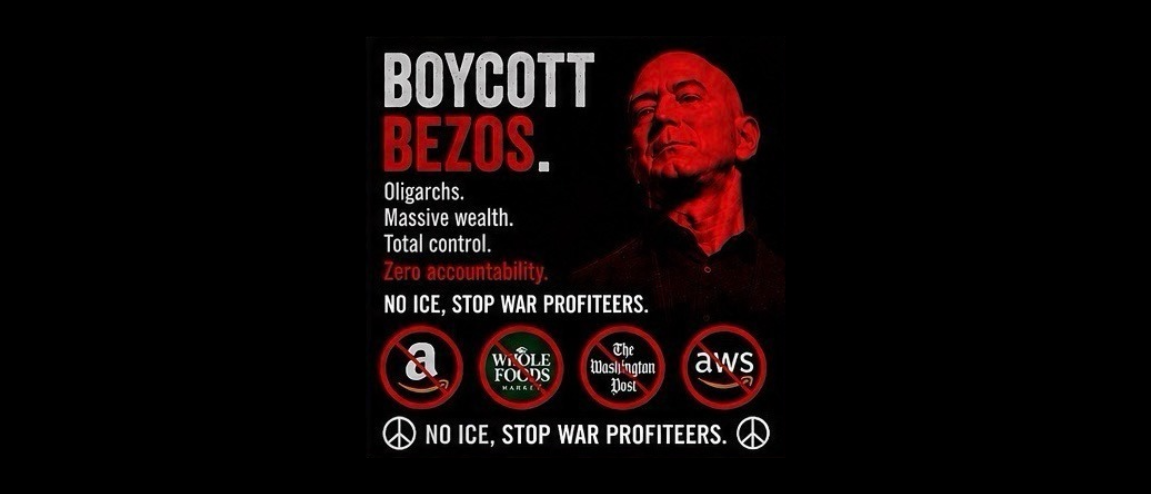
Fantasy aside, there are some true welfare queens in this country. Let’s start with corporations. The top one hundred companies receive, according to one source, a total of $163 billion in federal subsidies (https://factkeepers.com/meet-the-real-welfare-queens-the-corporations-who-get-the-most-in-subsidies/). Amazon is only #10 on the list, though there are plenty of other reasons to hate the company and its owner:
 Debra Efroymson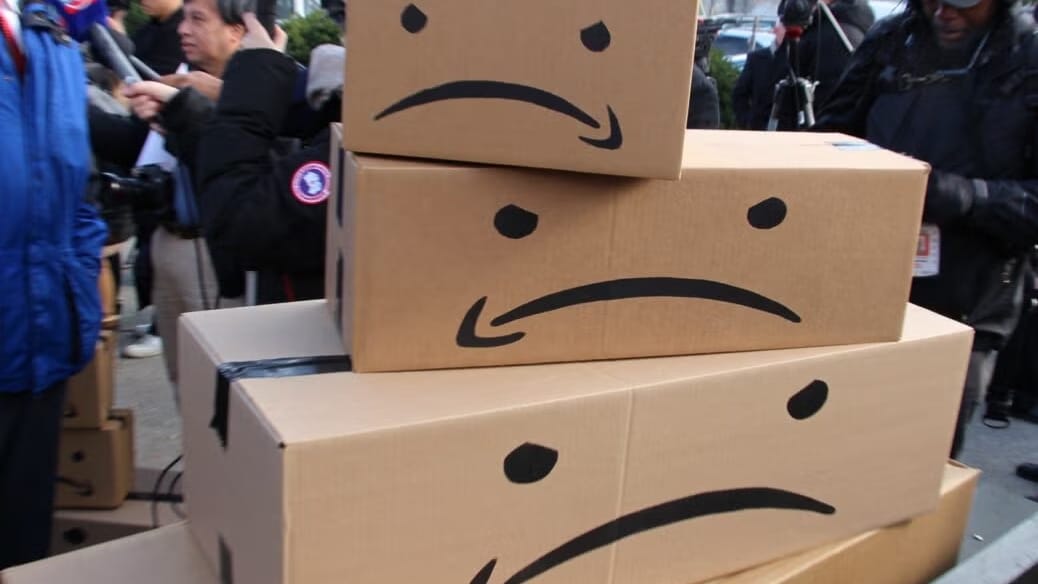
But it’s not just the giant corporations that reel in government benefits. The amount that the government spends on affordable housing, for example, pales in comparison to tax breaks for the wealthy. According to Matthew Desmond in his book Poverty, by America, “In 2020, the mortgage interest deduction allowed more than 13 million Americans to keep $24.7 billion. Homeowners with annual family incomes below $20,000 enjoyed $4 million in savings, and those with annual incomes above $200,000 enjoyed $15.5 billion.”
Likewise, deductions on interest on student loans saved low-income borrowers $12 million versus $432 million for those with incomes from $100,000 to $200,000. Tax benefits for 529 college savings plans will cost the federal government an estimated $28.5 billion for the years 2017-2026. Government subsidies for employer-sponsored health insurance cost an estimated $316 billion in 2022, and are projected to cost $600 billion by 2032. Guess what? Most low-income workers do not get employer-sponsored health insurance; it’s another tax break for the middle class.
According to Desmond, “Altogether, the United States spent $1.8 trillion on tax breaks in 2021. That amount exceeded total spending on law enforcement, education, housing, healthcare, diplomacy, and everything else that makes up our discretionary budget. Roughly half the benefits of the thirteen largest individual tax breaks accrue to the richest families, those with incomes that put them in the top 20 percent. The top 1 percent of income earners take home more than all middle-class families and double that of families in the bottom 20 percent.”
Yes, we should slash our military budget, and our budget for ICE should be eliminated entirely. But if we want to cut government waste and fraud, we also need to address subsidies for the wealthy.
Desmond further explains that “the average household in the bottom 20 percent of the income distribution receives roughly $25,733 in government benefits a year, while the average household in the top 20 percent receives about $35,363. Every year, the richest American families receive almost 40 percent more in government subsidies than the poorest American families.”
Oh, and while Mike Johnson has recently sent House representatives home for a six-week vacation, following their five-week August recess, people have to work to receive SNAP benefits, without getting extensive holidays. Most working Americans do not receive anywhere near the vacation time as their elected representatives. Of the 243 days from January 1-August 31, a full-time employee working five days a week would have worked around 165 of them, while the House held floor votes on just 65 of those days.
Remember the savings and loan bailout of the 1980s and early 1990s? The banks gambled wildly and failed, leading to a bailout that cost taxpayers more than $150 billion. And then the auto industry bailout that began in 2009 and cost taxpayers $80 billion. All encapsulated in the popular phrase, “Socialism for the rich and capitalism for the poor.”
So yes, we have welfare queens in this country. They are wealthy, often extraordinarily so. And they seem to feel no shame whatsoever in accepting (and of course lobbying for) government handouts. Fancy that.
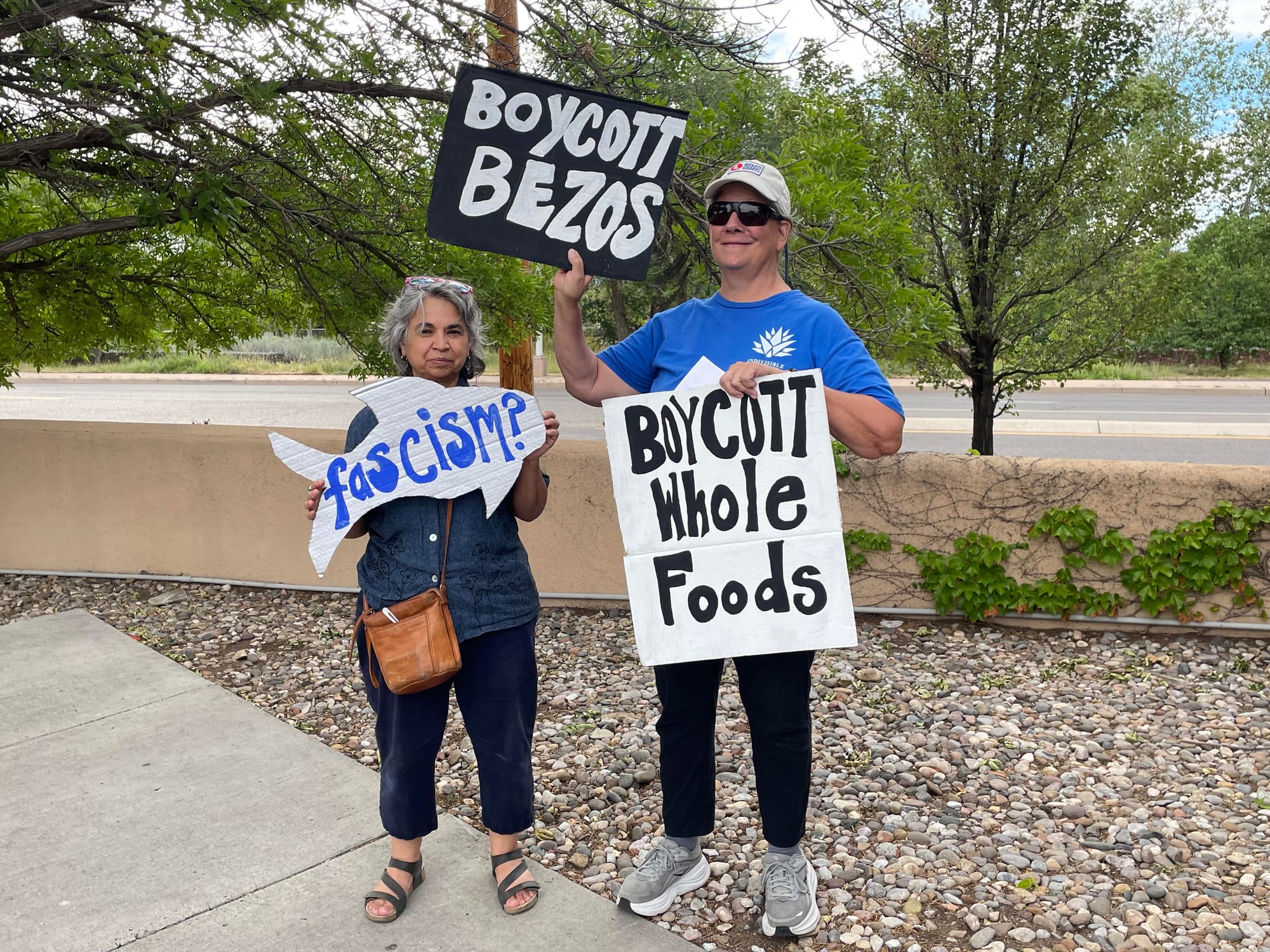
If you’re disgusted with billionaires preying on everyone else, please join us to protest Jeff Bezos on Thursdays, 5:30-6:30 p.m., to hand out leaflets or hold signs in front of Whole Foods.
 Guest post