
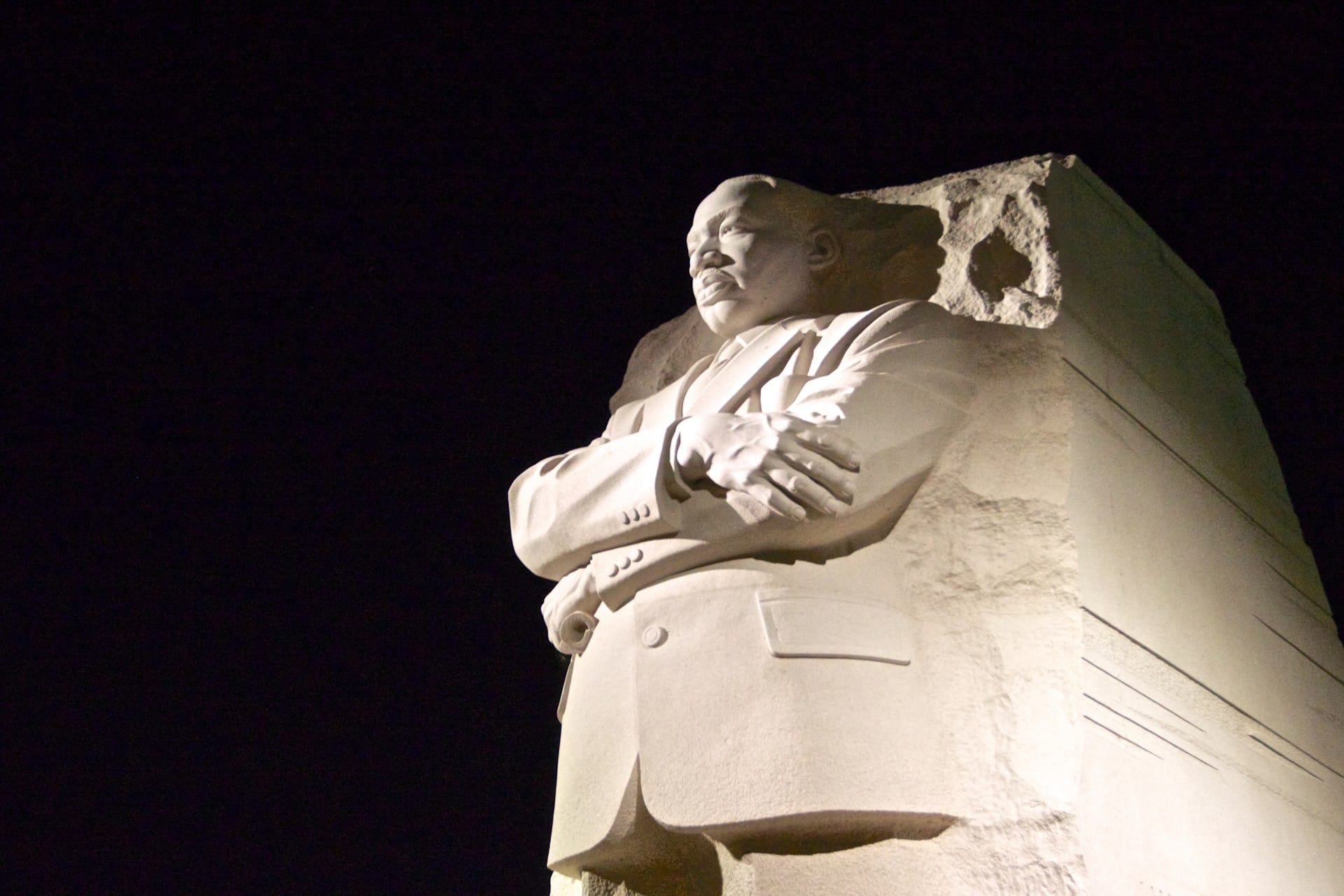
We say we're a nonviolent organization. What does that really mean and look like, especially when confronted by violence?
Martin Luther King Jr studied and practiced these principles all his life and taught others this practice. Long before Rosa Parks set foot on that bus and sat in the front, she had spent years internalizing these principles. Her mission of civil disobedience was clear that day, knowing this action would provoke violence and most likely result in arrest and jail time. John Lewis, before setting out on the heroic and infamous march across Edmund Pettus Bridge, was steeped in the ongoing practice of these principles.
Dr. King's six principles are meant to be considered, discussed, contemplated and practiced. Some we may not agree with. The philosophy includes the willingness to participate in sometimes risky actions and to face unpredictable behavior of the aggressor while remaining nonviolent. It's important to consider these before we are called to practice civil disobedience.
Our own tolerance of risk can certainly shift depending on many factors. We give one another the freedom and grace to make these personal decisions.
If we are grounded and comfortable with these basics, our actions together will remain calm, purposeful and an active form of resistance.
MLK Day will be on January 18th at the Roundhouse. This year is sure to be a joyous and inspiring event. More details to follow.
Dr. King’s Fundamental Philosophy of Nonviolence
These are the fundamental tenets of Dr. King’s philosophy of nonviolence, as described in his first book, Stride Toward Freedom. Dr. King often said that he got his inspiration from Jesus Christ and his techniques from Mohandas K. Gandhi. These principles should be embraced as a lifestyle.
- PRINCIPLE ONE: Nonviolence Is a Way of Life for Courageous People.
- It is not a method for cowards; it does resist.
- It is active nonviolent resistance to evil.
- It is aggressive spiritually, mentally, and emotionally.
- PRINCIPLE TWO: Nonviolence Seeks to Win Friendship and Understanding.
- The outcome of nonviolence is the creation of the Beloved Community.
- The end result of nonviolence is redemption and reconciliation.
- PRINCIPLE THREE: Nonviolence Seeks to Defeat Injustice, or Evil, Not People.
- Nonviolence recognizes that evildoers are also victims and are not evil people.
- The nonviolent resister seeks to defeat evil, not persons victimized by evil.
- PRINCIPLE FOUR: Nonviolence Holds That Unearned, Voluntary Suffering for a Just Cause Can Educate and Transform People and Societies.
- Nonviolence is a willingness to accept suffering without retaliation; to accept blows without striking back.
- Nonviolence is a willingness to accept violence if necessary but never inflict it.
- Nonviolence holds that unearned suffering for a cause is redemptive and has tremendous educational and transforming possibilities.
- PRINCIPLE FIVE: Nonviolence Chooses Love Instead of Hate.
- Nonviolence resists violence of the spirit as well as the body.
- Nonviolent love is spontaneous, unselfish, and creative.
- PRINCIPLE SIX: Nonviolence Believes That the Universe Is on the Side of Justice.
- The nonviolent resister has deep faith that justice will eventually win.
- Nonviolence believes that God is a God of justice.