
A few days ago, I talked with a young Afghan man currently living in Canada. “How did you get there?” I asked, expecting a fairly simple response. He drew a deep breath. “It’s a long story,” he replied, and then gave me a highly truncated version. “When the Taliban took over, I fled to Iran. From there, I applied for a humanitarian visa to Brazil. Then I worked my way across Latin America to the US-Mexico border, where I talked to the officials and they let me into the U.S. I then moved on to Canada.”
“You moved across Latin America by land?” I asked.
“Yes.”
It was my turn to take a deep breath. Of all the things I could (and should) have asked, I settled for, “Did you learn Spanish on the way?”
“Un poquito,” he replied.
His story should not have surprised me. After all, when I visit immigrants (many of whom have been here for decades) imprisoned at the euphemistically-named Torrance County Detention Facility (TCDF), many have similar stories. Some spent months or years traveling through Latin America, only, in some cases, to be seized at the U.S. border. As another volunteer commented on a recent visit to TCDF, these are just the kinds of people we should want in the U.S.
I think about my own maternal grandfather, who came to this country on his own after a bomb fell on his house in Ukraine. I’m not sure how he made it out of the orphanage and onto a boat, but I do know that when he reached the U.S., he worked days and studied nights, finally becoming a school principal. His future mother-in-law traveled with her three daughters from Ukraine to these shores; her husband only followed much later. She brewed illicit alcohol in a bathtub to survive; my great aunt would transport it to customers. My paternal great grandfather was a push cart peddler—a profession I can easily picture after my decades in Asia.
I think of all the small problems that snag and unravel me. Sure, I spent more than thirty years living outside the U.S., but I traveled almost always by plane, usually with permission to enter (when didn’t I? stories for another day!). I did start a few organizations, but the challenges I faced were relatively minor. We’d like to believe that we could rise to the occasion if necessary, but how many Americans would be up for the kinds of experiences that are not uncommon among our immigrant neighbors?
The Afghan man I mentioned at the start is working ten hour days, six days a week; a few evenings a week he studies English. “What do you do on your day off?” I asked. “Go hiking with my friends,” he replied. Another Afghan friend in Canada, who spent eight years in Bangladesh before finally getting to Canada, works two jobs. In her “free” time, she studies French, as she already has excellent English.
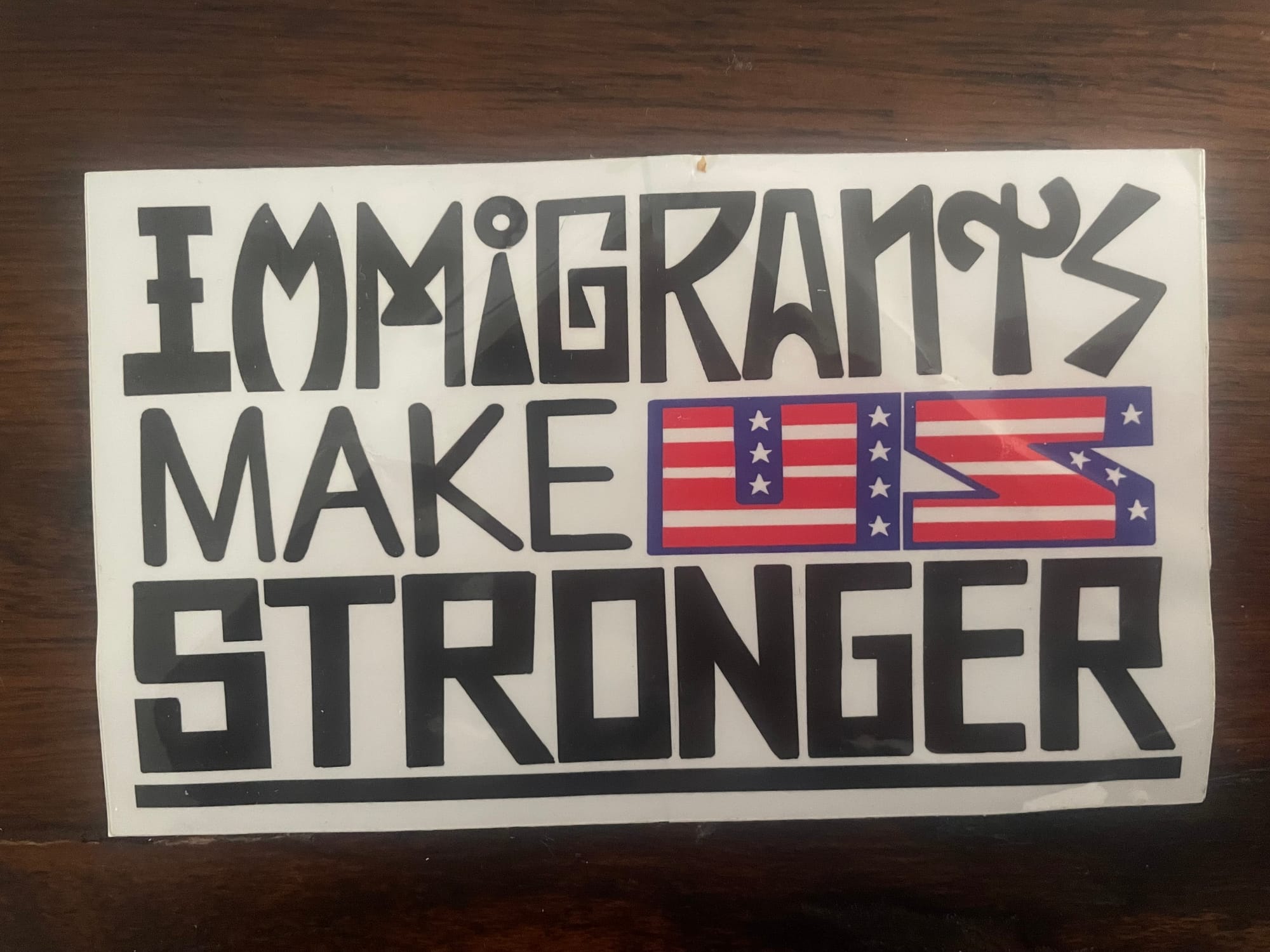
These intrepid, resourceful, hard-working people are just the kinds of people we should be thrilled to have in our country. Instead, corporations are allowed to profit off of inhumane treatment of them in immigration prisons. I am relieved to see that Americans have a far more positive attitude towards immigrants than they did before this current wave of cruelty began. And I hope that we continue to fight, even after this current administration is finally voted out of office, to make our immigration system far more humane. That starts by finally valuing and respecting these incredible people who endure so much in order to have an opportunity to work so hard here.