


In my previous blog:
 Debra Efroymson
I talked about the many ways in which corporations profit off of mass incarceration and detention. This profiteering extends far beyond such companies as GEO Group and CoreCivic to architecture, food services, telecommunications, transportation, and community services. Today I will conclude with some more of the valuable information contained in the recent book by Bianca Tylek and Worth Rises, The Prison Industry: How it Works and Who Profits.
 About Us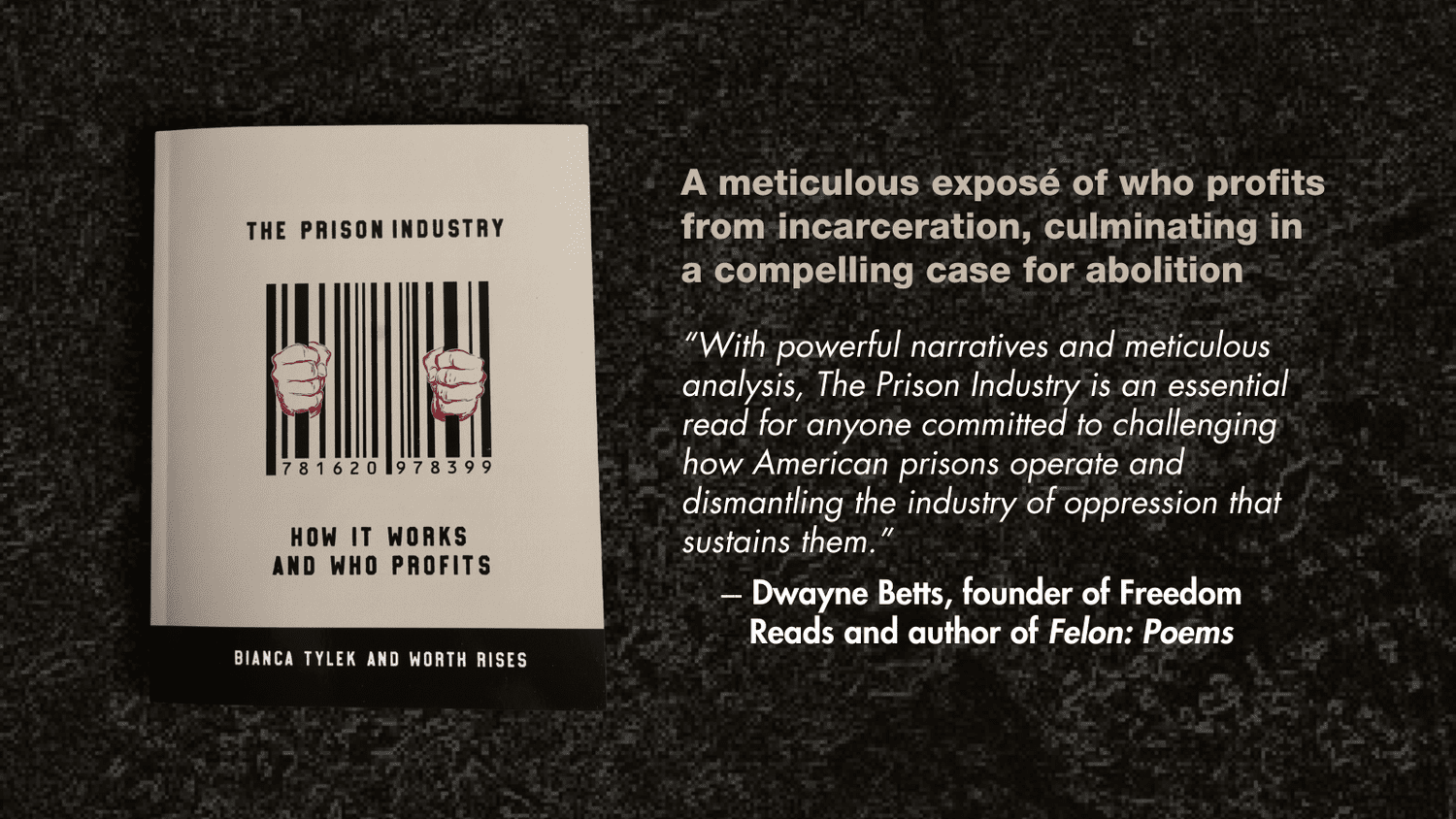
You have no doubt heard terrible things about the hiring practices of ICE. Consider these words from a CoreCivic training officer quoted in The Prison Industry: “People say a lot of negative things about [CoreCivic]. That we’ll hire anybody. That we are scraping the bottom of the barrel. Which is not really true, but if you come here and you [sic] breathing…then we’re willing to hire you.”
We all should be horrified by ICE spending $20 million to purchase electric shock gloves. We should also be horrified that corporations are happy to profit from such sales. Other corporations profit off of selling batons (complete with charts on the best parts of the body of the prisoner to beat) and Tasers, charmingly described as “less lethal”.
I’m sorry to continue horrifying you, but consider this. The Prison Industry describes a company (Bob Barker) that sells such poor quality soap, with so many dangerous preservatives, “the corporation’s own safety warning advises people to avoid skin contact with the soap.”
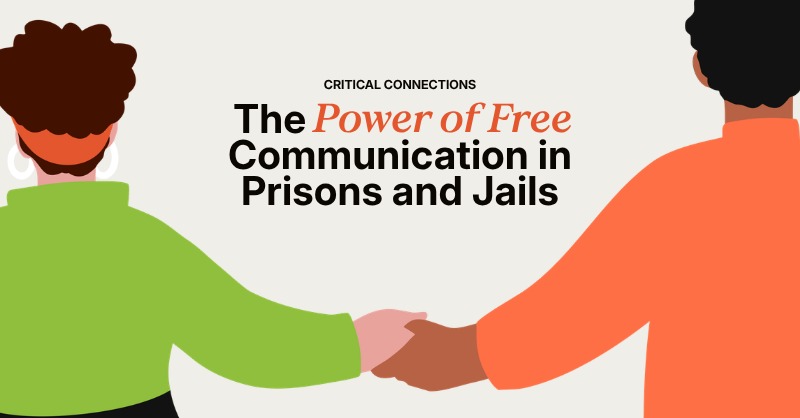
Telecommunications is a big money earner for corporations. How exactly is it that companies can charge so much for telephone or video calls to inmates earning pennies, if that, for an hour of work, when those of us on the outside get to make calls virtually for free? WorthRises has an entire report about the ways in which communicating with families helps both those locked up and their families (and by extension, their communities and society overall). And yet corporations make $1.5 billion a year from telecommunications in prisons. In-state calls are unregulated and can cost as much as $0.75 a minute. The situation in jails is even worse: a 15-minute call can cost almost $25. Part of the reason for the outrageous charges is that the telecommunication companies give kickbacks to prison and jail administrators. Six states now offer free phone calls of varying lengths to inmates (https://www.inmateaid.com/blog/6-states-that-now-offer-free-inmate-phone-calls-the-changing-landscape-of-prison-communication); New Mexico is not one of them.
Some other things I did not know: prisoners can be charged a booking fee, room and board, medical co-pay, and various fees for probation and parole. Whatever you think about the “abolish prison” movement, it is hard not to see how outraged people are by the multitudinous ways in which corporations (and governments) extract money from Black, brown, and indigenous populations as part of our system of mass incarceration and detention.
Then there’s the food served to those locked up. Common complaints range from inadequate portions and nutritional value to food being genuinely inedible. Stories include prison employees digging food out of the trash and serving it to prisoners, and running out of food. Here’s a not so fun fact: the same corporations that serve insufficient and/or inedible food then get contracts to sell prisoners something edible (if usually nutritionally void) through commissary. They thus have a double incentive to serve lousy food: it costs less and they know that prisoners will beg money from their families or save from their grossly underpaid labor in order to eat. Each year there are $1.8 billion of commissary sales—not just food, but other basic necessities in prison such as soap and menstrual products. One female former inmate describes working fifty hours just to afford sanitary products for one month.
Remember Joe Arpaio, the atrocious former Maricopa County (Arizona) sheriff? He claimed that he spent $1.15 a day to feed the department’s dogs…and only forty cents a day to feed the inmates. More typically, prisons spend from $0.56 to $3.00 per meal.
Let’s breeze past health care, which, unsurprisingly, is of extremely low quality and often denied, even when it leads to inmate deaths. Some prisoners cannot receive health care because they cannot afford the co-pay. Our taxes go to fund corporations to deny prisoners decent health care.
Transportation abuses are also sickening. Prisons and ICE contract private companies to transport people, paying per passenger mile. That gives incentives to pack lots of people into each transport and drive them much farther than necessary, again as detailed in The Prison Industry: “Chained together, people are regularly hauled for days and, in many cases, even weeks. In one instance, a passenger being extradited from Ohio to Colorado for a parole violation was subjected to a torturous 20-day journey…though the corporation claimed its average trip was 4 to 5 days.” Even when trips are shorter, drivers are not paid for lodging, so they may drive through the night, increasing the risk of deadly crashes. Oh, and did I mention that these transports are often not air conditioned, leaving prisoners in sometimes lethal conditions?
And finally, let’s talk about “community corrections”, which is a misleading term. The big prison and detention corporations—CoreCivic and GEO—have started buying up community protections programs. Crazily, the people being subjected to the programs are responsible for footing the bill, which helps explain their popularity; they are yet another way to transfer wealth from the poor to the rich. Some of the community centers keep people in conditions comparable to prison; one former resident of a private halfway house said there were only two bathrooms for more than 70 men.
Hundreds of thousands of people in the US are subjected to electronic monitoring, bringing in an estimated $1.2 billion a year. Those financial incentives also encourage the expanse of the program. “These costs include hefty setup fees of up to $200 and daily monitoring fees that can reach $40, meaning that the cost of electronic monitoring can easily exceed the monthly cost of rent for many.” If the device is damaged, people can be charged $1,200 to replace it. “Far from being tools for decarceration, as their developers claim, these applications are just 21st-century shackles,” according to The Prison Industry.
Many of you saw the video of the Haitian man falling on the ground in tears after having an ankle monitor attached. A few days after I wrote this blog, I was at the Friday honk and wave. After we finished holding up our anti-ICE signs (and receiving many warm thanks from people driving past), a Chinese woman approached us. She said her ankle monitor was hurting her, and ICE wasn’t responding to her calls. She wanted to talk to someone who could help her. The abstract suddenly became personal, and her pain has weighed on me for days.
Some drug and alcohol rehabilitation programs consider unpaid work a form of treatment, with people working in oil refineries for Shell and Exxon, in warehouses for Walmart, and slaughtering chickens for Simmons Foods. In other cases, the government takes a large share of prisoners’ salaries.
If you want to learn more, I strongly suggest ordering the book from Worth Rises. And again, I encourage people to remember, as we seek to dismantle ICE, that we must also address its predecessor, the ongoing, horrific, and grotesquely profitable system of mass incarceration in this country. As the popular button urges, let’s Make America Kind. While we work to shut down the detention centers, let’s not forget all the other people of color locked up in atrocious conditions, often for no greater crime than that of being poor. (In future blogs I plan to share what I learn from the books Poverty, by America by Matthew Desmond, and How to Close a Camp, Dispatches from the Fight against Immigrant Detention, by John Washington.)

 About Us