
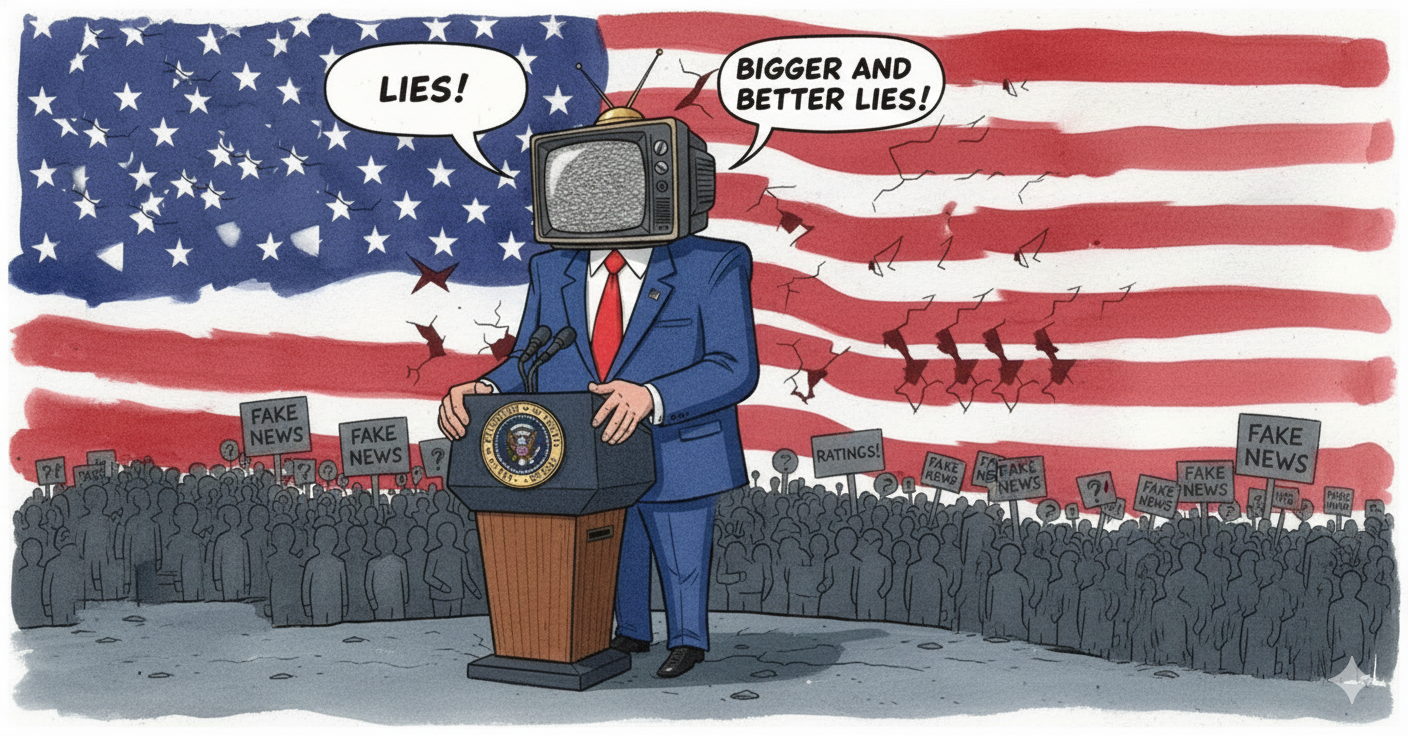
We are currently witnessing the peak of the "television presidency." According to historian Heather Cox Richardson, the current administration has turned the White House into a production studio where the primary goal is capturing "eyeballs" through a constant stream of sensationalized content.
This phenomenon didn't start with Donald Trump. To understand how we got to a government run like a reality show, we have to look back at the deregulation of the media in the 1980s and the subsequent manufacturing of the "Trump myth" by television producers in the 2000s.
The Reagan Blueprint: Deregulation and Visuals
The roots of the modern TV presidency lie in the 1980s. Ronald Reagan, a former actor, understood the power of the screen. He utilized specific imagery—such as the "fabulous picture of Reagan in the cowboy hat"—to project a vision of American strength. While Reagan was an English-style rider, he actually adopted the American cowboy style in order to sell a specific ideology: "cowboy individualism" and with it the deregulation of the federal government.
Crucially, this era also dismantled the guardrails of American media. In 1987, the FCC, under a chairman who had served on Reagan’s campaign, repealed the Fairness Doctrine. This doctrine had previously mandated that broadcast networks devote time to contrasting views on issues of public importance. Reagan vetoed Congress's attempt to codify the doctrine into law, arguing it hurt the public interest. This deregulation allowed for the rise of polarized, entertainment-driven political media, where gaining an audience took precedence over balanced reporting. Fox "News" was born.
How TV Propped Up Trump
While Reagan created the regulatory environment, reality television in the 2000s created the specific character of Donald Trump that voters would later elect. Before The Apprentice, Trump was a tabloid fixture with a turbulent financial history of failure after failure. It was the show's producers who constructed the image of the infallible business genius, a complete fiction but one that served their purpose.
 Contributors to Wikimedia projects
_(cropped).jpg/977px-Donald_Trump_(8567815294)_(cropped).jpg)
When producers arrived at Trump Tower in 2003, they found a setting far removed from the glitz seen on screen: the carpets were musty, the furniture was chipped, and the decor was dated. To fix this, they built a set within the building to simulate a boardroom, engaging in a mission to make Trump look like "royalty" – an image Trump has favored ever since.
The deception went beyond set design. Producers and editors essentially "reverse engineered" the show to make Trump appear competent.
- The "Firing" Fiction: Trump frequently had no idea what was going on with the contestants and would often fire the "absolute wrong person" based on a whim or simply because it was the only name he remembered.
- Editing Magic: Editors had to splice footage to justify Trump's erratic decisions, making him look decisive rather than clueless. As producer Jonathon Braun admitted, their job was to ensure he did not look like a "complete moron".
- Scripting Reality: In one instance, Trump praised a team for a meatball pizza idea after he had already cut a side deal with Domino's for a cheeseburger pizza. Producers had to write a script for him to read in the boardroom to cover up the incongruence and make it look like a strategic business lesson.
This "reality" show successfully sold a neoliberal fantasy: that corporate capitalism was a meritocracy led by a decisive, all-knowing boss.
 Dan Clarendon
The "Cartoonish" Evolution in the Oval Office
The current presidency has taken that constructed reality and applied it to the federal government. Donald Trump, who views policymaking as a business of public relations, has staffed his administration using "central casting," choosing appointees based on their "look" (such as General Mattis resembling George C. Scott in Patton) rather than solely on expertise.
 Suzanne Garment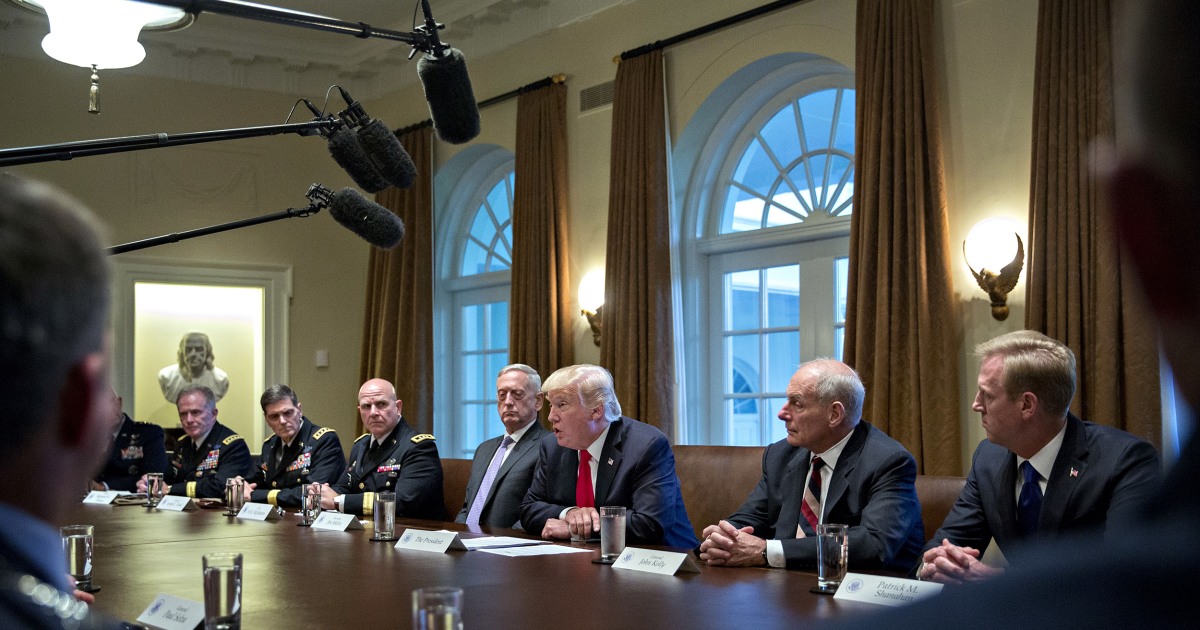
The administration now functions as a "reality show out of the Oval Office," where Chief of Staff Susie Wiles acts as a producer. This involves:
- Visual Fear-Mongering: Using staged imagery, such as depicting Santa Claus as an evil figure or filming arrests, to keep the public in a state of heightened emotion.
- Blurring Fact and Fiction: Presenting a "film series" of arrests to project strength, even when the narrative conflicts with the facts regarding actual criminal charges.
- Threatening the Medium: In a "deranged" turn, the former reality star has threatened to terminate the broadcast licenses of networks that do not praise him, treating the free press as subordinates in his production.
The Collision with Reality
The danger of a presidency built on production values is that, eventually, the show cannot hide the results. HCR argues we are seeing the fantasy world constructed by this TV presidency "smashing into" reality.
For decades, the rhetoric of deregulation promised efficiency. However, recent drastic cuts to agencies like FEMA and the Weather Service—led by figures like Elon Musk—have shown voters that the government was already "lean to the bone," resulting in chaos rather than savings. Furthermore, the "redemption arc" that audiences expect from scripted drama—like Scrooge in A Christmas Carol—is completely absent; the wealthy protagonist is not changing his ways, and the audience is left dealing with the consequences.
Canceling the Show
The "TV presidency" began with Reagan's deregulation and cowboy imagery, but it was perfected by The Apprentice producers who polished a chaotic businessman into an icon of authority. Now, as the disconnect between the on-screen narrative and the viewers' lived experience grows, the show may be facing cancellation. As Richardson observes, it feels like we are "watching the end of a television show that just went on too long," leaving the country to fix what was broken while we were all glued to the screen.
Think of the modern presidency like a house that has been "flipped" for a reality TV show. Reagan removed the foundational inspections (deregulation), and The Apprentice producers applied a fresh coat of gold paint over chipped furniture and musty carpets to make it look luxurious (image crafting). Now that the buyers (the voters) have moved in, the paint is peeling, the pipes are bursting, and they are realizing that "production value" doesn't keep the roof from leaking.