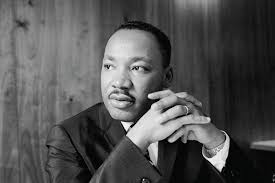
Today, January 15th, is the birthday of Martin Luther King Jr., born almost a century ago. It is important to remember who he was.
When he was murdered in Memphis in 1968, Dr. King was in the city to support striking sanitation workers. The garbage men there—almost all of them black—had recently formed a chapter of the American Federation of State, County and Municipal Employees to demand better wages and working conditions. The Civil Rights movement and the Labor movement were closely aligned at that time. At the 1963 March on Washington for Jobs and Freedom where King delivered his iconic “I Have A Dream” speech, the microphones and other logistics were paid for by the United Auto Workers, whose union president Walter Reuther was also on the stage that day. Racial justice and economic opportunity were inseparable in King’s mind.
Today Martin would still be advocating for American workers regardless of their race: a living wage, paid sick leave, affordable child care, guaranteed health insurance and pensions that provide a dignified retirement for all.
Reverend King was a pastor whose politics were rooted in his deep Christian faith. Non-violence was always more than a tactic for him. He refused to meet force with force because he believed that, appearances to the contrary, the world was not ultimately ruled by bristling arsenals or brute force. Missiles and megatons might have tremendous destructive capability but had no constructive potential to heal the wounds of people living in fear or build a more equitable society.
Today, as our government threatens its foreign neighbors with military invasion and aims to crush dissent at home with troops and tear gas, he would be calling on American citizens to resist non-violently. He would be marching with demonstrators in Minneapolis and calling on Congress to take action to stop the saber-rattling emanating from the White House.
King was called a radical and targeted by law enforcement. The FBI tapped his phones and tried to smear his reputation. He was arrested and jailed often, condemned as a criminal for exercising his civil rights. Today, the Department of Justice is again being used to surveil and investigate those who criticize the Trump administration. Protesters engaged in peaceful assembly are labelled as domestic terrorists and enemies of the state. Dr. King today would advise us to have courage, not to submit or obey in advance, but instead to counter lies and slurs on our character with the example of our lives.
Born in the segregated South, Martin encountered firsthand the irrational hatred that ultimately resulted in his death. Racism is still potent today in our country. White supremacists dine at Mar-a-Lago. The President states a preference for blond, blue-eyed immigrants—Danes and Swedes—as white Afrikaners receive preferred asylum status to the United States. Race is again being used to pit Americans against one another and keep us from coalescing against real enemies: an economy that favors the ultra-wealthy and a federal budget that bloats military spending at the expense of veterans services, healthcare and other human needs.
But Martin never allowed his soul to be poisoned or return hate for hatred. “Darkness cannot drive out darkness,” he counseled. “Only light can do that.”
He would tell us not to give up hope. Not to give in to bullying or intimidation. Not to give away our own agency. Not to let ourselves be splintered by skin color or immigration status or gender identity or the other superficial markers that rulers employ to disempower and divide us, but to be united in our commitment to human freedom and dignity. Not to stop believing or singing that one day we shall overcome.