by Nico Devitt
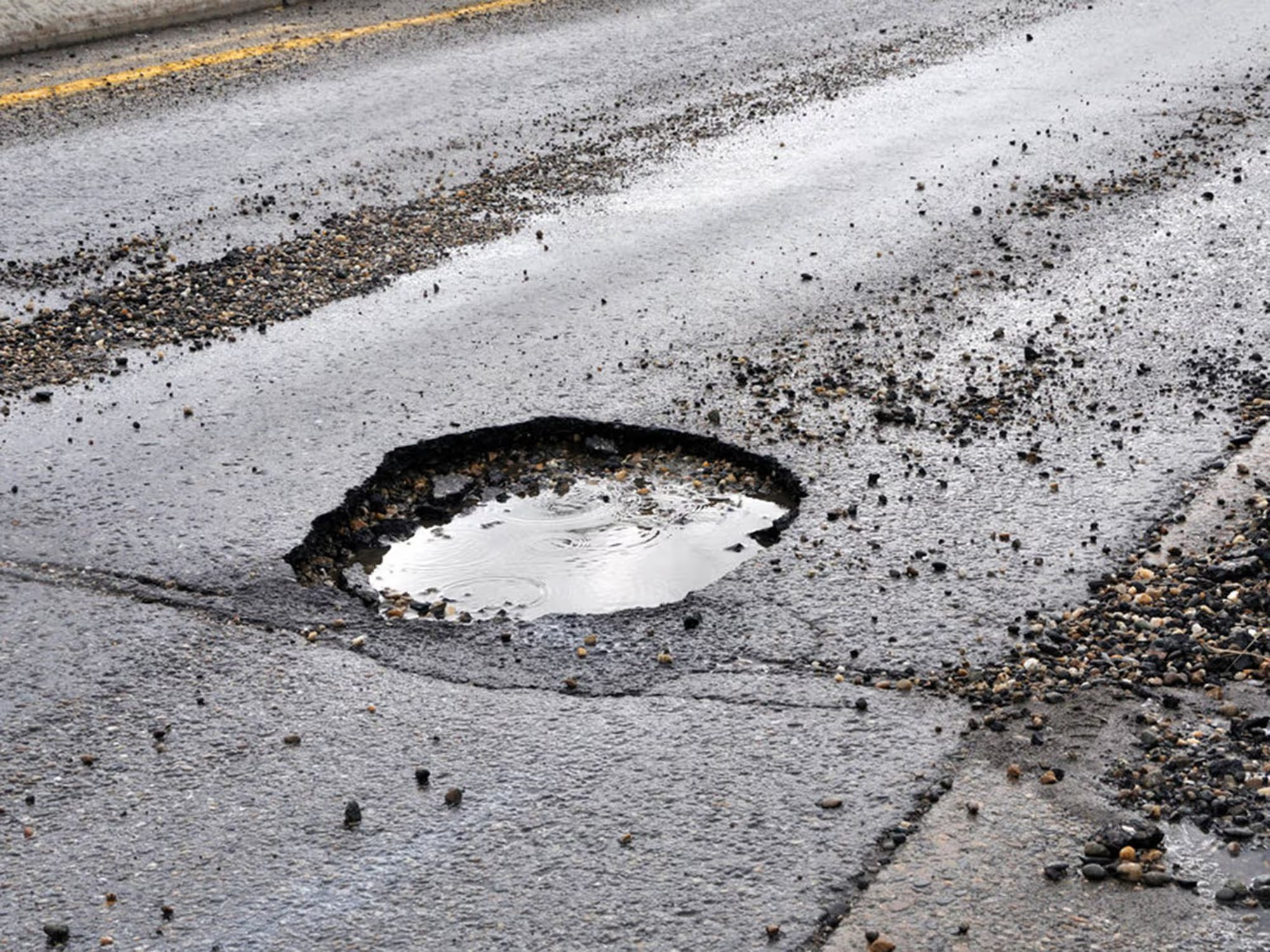
I like thinking about potholes, and not just because I am a big fan of public infrastructure. I like thinking about potholes because it helps me think about how I interact with the government we have, and what I want the government to aspire to be.
What do I mean by that?
Well, I imagine that when most people drive down a well paved road, almost no one is thinking “Wow! The Department of Transportation is doing an amazing job. They really are using my tax dollars well.” Most people are probably thinking about being late or what they need to pick up at the store, or what that idiot is doing in the left lane going 10 miles under the speed limit. On the other hand, I bet most people are quick to think about the government when they hit a pothole. “Why can’t this city maintain its roads? What are my tax dollars paying for? That pothole comes back every year!”
I really think this is part of the reason a large proportion of the population seems to be against increasing government spending and government-based services in general. We tend to remember the potholes (or the government failures) much more than smooth roads and government successes. So because our memory is skewed towards the negative it becomes easier for anyone to drum up support for decreasing government spending and services.
Going further, what a lot of people might not know is that if you hit a pothole and it damages your vehicle there is a program where you get compensated by the state for that damage. You just need to fill out a Tort Notice of Claim form to the General Services Department. Now I am guessing that, unless you’ve hit a pothole and had a full blowout, you just kept driving and never got a chance to try to get reimbursement from the state, which leads me to the other part of government services that potholes help me consider.
If you don’t run into a specific problem you might never know what services the government has been developing to help the general public over the last decades. For example, I used to work for the State of New Mexico’s Childhood Lead Poisoning Prevention Program. When I tell people this the most common response I get is, “I didn’t know there was a lead problem in New Mexico.” New Mexico does not have a severe lead problem, but lead poisoning is still a problem not only in our state but in this country as a whole. It is becoming rarer, however, so most people will never have a reason to know about the Childhood Lead Poisoning Prevention program in this or any state. That is actually a good thing. Public health workers have been working for decades to make sure this problem is a rare occurrence with the goal of someday eliminating it as a threat to public health. These workers in this program, and many others like it, have been “smoothing the roads,” and because of that they and their work go largely unnoticed. But when someone encounters that terrifying “pothole” of childhood lead poisoning, there is a program there to give them support and education, and I think it would be so much worse, if when people encountered these crises there was no one and nothing to turn to.
When a disaster strikes you will see people say “Where is the government?”or “The Government needs to do something.” Even in places where the populations have voted overwhelmingly to defund that same government, to discontinue the services that they need in those moments of strife. In those times you will see that people still have an intrinsic belief in the government, although it tends to be expressed in criticism rather than praise. I don’t want to argue that the government is above criticism. It isn’t and shouldn’t be. It is right that we ask for excellence from the government we fund, but we also have to stay aware of all of the things that the government provides to us, our neighbors and our communities. It is easy to take these things for granted. When the roads are smooth we forget about the potholes.
Here's where I get to the aspirations I hold for the government. The government that I want to see implemented in New Mexico, the country, and ultimately the world is a proactive government focused on preventing harm. Firstly, because I see that as the most moral goal for any government activity. Second, I have faith that as we “smooth the roads” for the population as a whole, as we take away more of the fear and uncertainty around us, then people will dream more, develop more, and care more for themselves, for their communities and for the world. Lastly, it is actually more affordable. The old phrase is right: an ounce of prevention is worth a pound of cure. But it is so much easier to value the cure over prevention. If preventative programs are done right, it is easy for people to think of them as a waste of money, regardless of the data. So the next time you see a government program and think “Why are we funding this?” or “What a waste of money,” take a moment and ask yourself, “Could this be filling a pothole?”